

What is Ecommerce? This is one of the most frequently asked queries by students, businesspeople, and professionals who wish to establish their online business venture or pursue a lucrative career in Ecommerce. People today purchase anything from groceries to fashion, electronics to digital goods from the Internet, thus making Ecommerce one of the fastest growing industries across the globe.
No matter if you wish to be an Amazon Seller, Flipkart Seller, Meesho Seller, launch your own Ecommerce Business or pursue a successful Ecommerce Career; knowing about Ecommerce is the foremost step towards achieving your goals.
However, one of the major hurdles that beginners often encounter is that they do not know how to get started. Deciding upon which marketplace to choose, what profitable products to sell and how to manage their listings becomes difficult for them at times. This guide will explain all this and more in simple language.
What is Ecommerce?
Ecommerce or Electronic commerce is the purchase and sale of products or services using the internet. Customers can browse for products on the web, purchase them, make virtual payments, and get their purchases delivered to their doorsteps without stepping into a physical store.
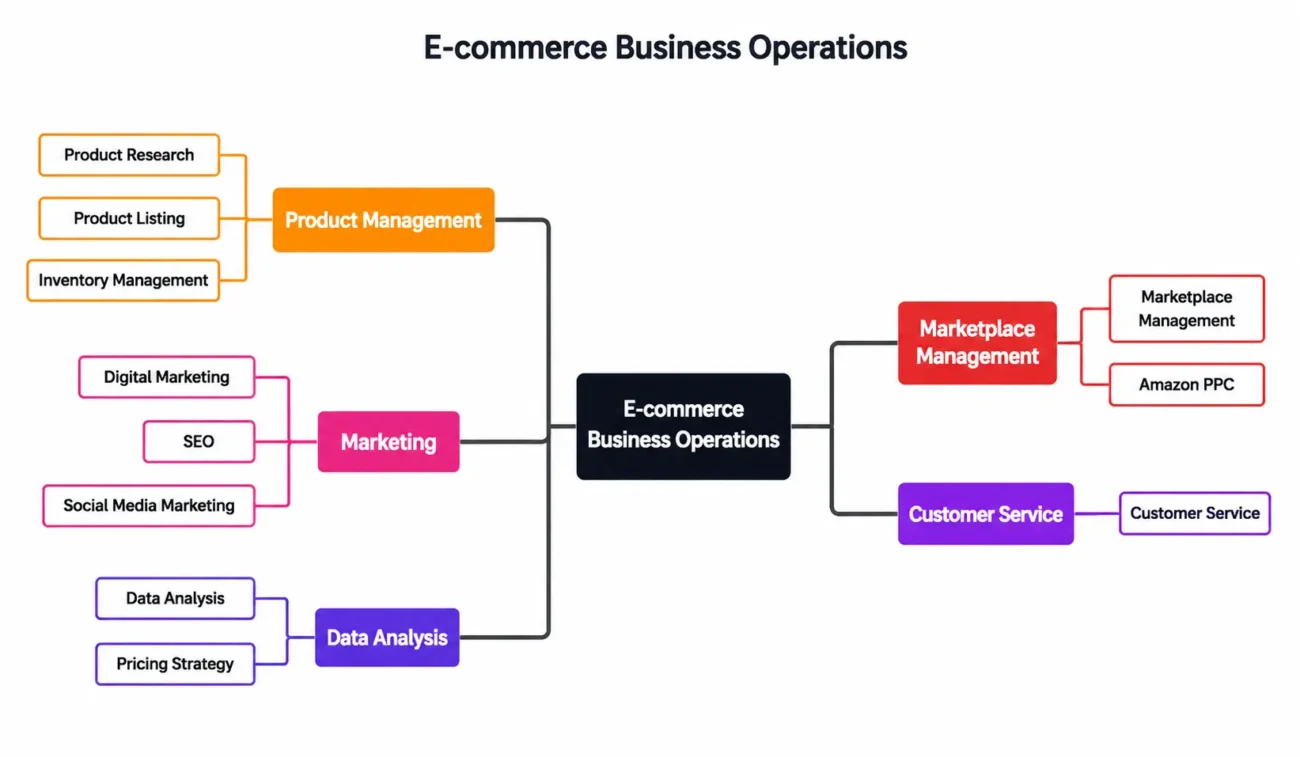
Ecommerce consists of various operations such as:
- Product selling online
- Virtual payments
- Listing of products
- Inventory management
- Order processing
- Shipping
- Customer support
- Marketplace management
- Digital marketing
Some well-known Ecommerce platforms are:
- Amazon
- Flipkart
- Meesho
- Shopify
- Myntra
- Etsy
- eBay
There are millions of enterprises using Ecommerce to connect to their customers around cities, states, and even nations.
Why Ecommerce Matters Today
Ecommerce industry is growing fast because consumers’ buying patterns are now moving online.
Following is some of the major factors that have contributed to its growth:
- Usage of smartphones
- Internet affordability
- Online payments security
- Fast shipping options
- Customer convenience
- Lower business setup cost
Businesses can now sell their products at all times without setting up a brick-and-mortar store.
Example from real world:
A Jaipur handicraft store which was earlier selling its products only to customers near its locality can now sell products all over India by using Amazon and Flipkart.
Types of Ecommerce
Knowing the various types of Ecommerce allows firms to identify which selling model would suit them according to the product type, audience, and firm’s objectives. Each selling model has its own significance and different prospects for growth.
B2C (Business to Consumer)
The most prevalent form of Ecommerce is B2C, in which the company sells products to consumers online via online marketplaces and websites. Majority of consumers buy through B2C sites because they are convenient, inexpensive, and offer fast deliveries.
Example: Amazon, Flipkart, Myntra
B2B (Business to Business)
Here, instead of selling the products to consumers, one company sells the products or services to other business organization. It is a model that is mostly adopted by wholesalers, manufacturing firms, distributors, and software companies to deliver their products or solution to the organizations.
C2C (Consumer to Consumer)
C2C (Consumer to Consumer) enables individuals to sell their products to other individuals via internet markets. This type of marketing strategy is perfect for selling used items, handmade items, collectible items, or personal items without having a business.
Example: OLX, Facebook Marketplace
C2B (Consumer to Business)
C2B (Consumer to Business) is a business model where individuals sell their products or professional skills to businesses. Most freelancers, influencers, designers, and content creators operate under this business model because of their special skills to the company.
Examples: Freelancers, influencers, graphic designers, content creators
Ready to Start Your Ecommerce Journey?
Learn from industry experts, gain practical experience, and build a successful Ecommerce career with Alram Academy, Jaipur.
👉 Book Free Demo
Advantages of Ecommerce
There are several reasons why ecommerce has become popular among many businesses because of its advantages, thus making it one of the most booming industries in the world. Some of these advantages include:
1. Minimal Investment
The cost of establishing an Ecommerce Business is relatively low compared to that of having a brick-and-mortar store where much money is required for things such as rent and interior decorations.
2. Unlimited Geographical Location
In contrast to brick-and-mortar stores, Ecommerce business does not depend on geographical location as the business can sell to customers in other places like international customers.
3. Operating Round-the-Clock
Unlike in brick-and-mortar stores where there is limited time in which sales can be done, Ecommerce sites operate 24 hours a day, seven days a week.
4. More Insights About the Customer
The analytics provided by ecommerce websites enable businesses to make better decisions. The analytics tool will help them understand customer behavior and popular products among other things.
5. Business Scaling Is Easier
As demand for goods increases, it is possible for the business to scale and offer more variety of the product, enter into new markets and increase sales without having to open up more physical stores.
6. Various Ways of Selling
It is easier for companies to sell their goods using different methods online. Such selling methods may be Amazon, Flipkart, Meesho, Shopify, one’s own website and even on social media websites.
Popular Ecommerce Business Models
Marketplace Selling
Marketplace selling involves the marketing of products via popular channels such as Amazon Seller, Flipkart Seller, and Meesho Seller. This type of Ecommerce selling method is the easiest method of starting Ecommerce because there are already millions of active customers available.
Online Store
An online store enables businesses to sell products via their own online platform using platforms such as Shopify and WooCommerce. This is a good business method for gaining full control over branding, customer experience, and customer data. Also, it ensures that there are more profits in the long run.
Drop shipping
This is another form of Ecommerce business method where products are shipped directly to the customer from the supplier. This method does not require any product to be stored by the seller.
Print on Demand
Print on Demand enables vendors to sell personalized products like T-shirts, mugs, mobile phone cases, and other products which get printed after receiving a request from a consumer. Thus, there is no need for maintaining stock and associated risks of financing.
Subscription Business
The subscription business model enables businesses to earn money every month or year through subscription fees from customers. Examples include online learning sites, software as a service, membership websites, and streaming services.
Essential Skills Required in Ecommerce
Successful Ecommerce professionals continuously develop practical skills.
These include:
Career Opportunities in Ecommerce
There are some great career options available in the Ecommerce industry.
These include the following positions:
Ecommerce Executive
Responsible for day-to-day marketplace activities.
Amazon Account Manager
Responsible for managing Amazon Seller accounts.
Marketplace Manager
Concerned with the following tasks:
- Product Listings
- Pricing
- Promotions
- Sales Performance
Product Listing Executive
Makes optimized product listings that include proper titles and descriptions of products.
Amazon PPC Specialist
Runs campaigns for increasing the sales and visibility of products.
Ecommerce Marketing Executive
Works on:
- Paid Ads
- SEO
- Social Media Marketing
- Email Marketing
Shopify Developer
Designs online stores using Shopify.
Warehouse & Operations Executive
Responsible for warehouse and operations activities.
Business Owner
Create your Ecommerce business and sell products all over the country.
Tools Every Ecommerce Professional Should Know
Examples of popular ecommerce tools are:
- Amazon Seller Central
- Flipkart Seller Hub
- Meesho Supplier Panel
- Shopify
- WooCommerce
- Canva
- Google Analytics
- Google Trends
- Microsoft Excel
- ChatGPT for content creation support
Understanding these tools will help increase efficiency and effectiveness.
Common Challenges in Ecommerce
The main hurdle in Ecommerce is coping with high market competition along with consistency in sales and profit. Firms may encounter problems including inventory issues, price pressures, product return issues, customer complaints, market policy changes, and escalating cost of advertisements. Further, making optimized listings, managing order process effectively, and keeping up to date about different platforms such as Amazon, Flipkart, and Meesho needs constant education. With the proper Ecommerce Training, effective Marketplace Management and strategic planning, these hurdles can be overcome successfully and enable firms to grow sustainably in the highly competitive environment of Online Selling.
Ecommerce Pro Tips to Help You Succeed
✅ Opt for products that have stable demand.
✅ Study the competition before listing products.
✅ Craft SEO-Optimized Product Listings.
✅ Use high-quality product photos.
✅ Learn Amazon PPC before starting ads.
✅ Review customer feedback frequently.
✅ Update inventory often.
✅ Prioritize customer satisfaction.
✅ Always keep yourself up to date.
Learn Ecommerce with Alram Academy, Jaipur
Alram Academy, based in Jaipur, is an Ecommerce Learning Institute for individuals who are committed to establishing themselves in the world of Ecommerce Careers or creating their own Ecommerce Business.
Students learn by doing in:
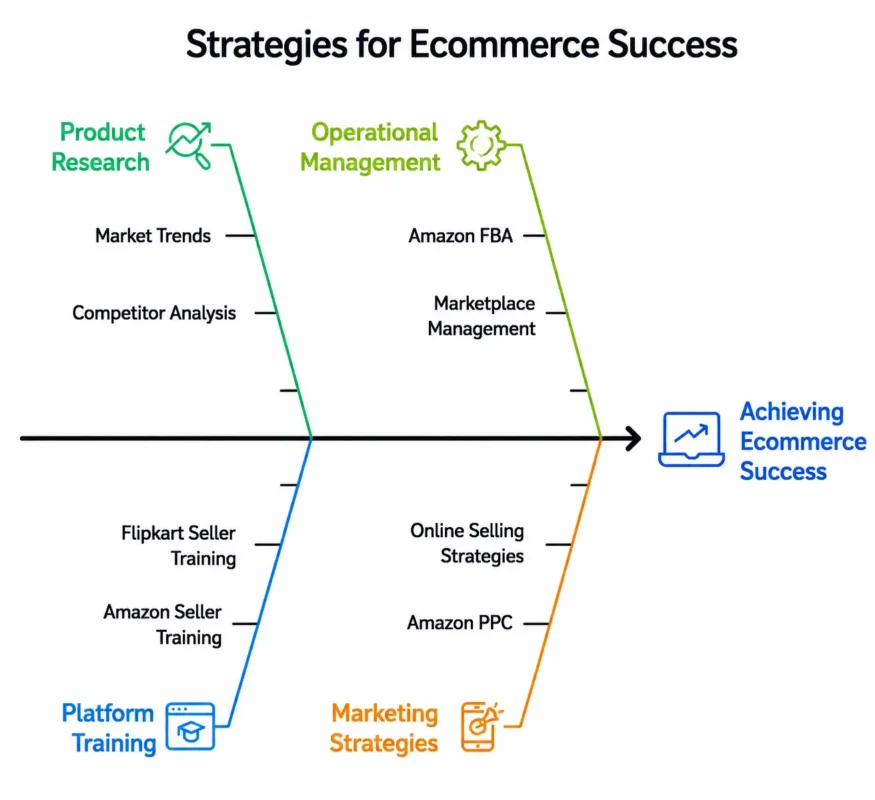
This learning focuses on implementation through live projects that help students, job aspirants, entrepreneurs, and businesses gain practical Ecommerce skills.
Frequently Asked Questions (FAQs)
What does Ecommerce mean in simple terms?
Ecommerce means the process of purchasing and selling goods and services on the internet through websites or apps.
Is Ecommerce a good career option?
Yes. Ecommerce is a rapidly growing industry where there are opportunities in digital marketing, marketplace management, logistics, product listing, advertising, analysis, and entrepreneurships.
Which is the best platform for beginners in Ecommerce?
A lot of beginners start with Amazon, Flipkart, or Meesho because such marketplaces have a large number of customers and provide the facility of being sellers on the platform.
Can students get into Ecommerce?
Yes, of course. Students can start learning about it with an Ecommerce Course which prepares them for internships, jobs, or even their own Ecommerce store.
Conclusion
What is E-commerce is the basic starting point for anyone wishing to make a mark in the current digital economy scenario. If your aim is to be an Amazon Seller, Flipkart Seller, Meesho Seller, develop your very own E-commerce Business, or even opt for an interesting E-commerce Career, then you must know the best ways to do so.
By means of structured E-commerce Training, gaining experience and expert advice on the same, one can confidently venture into the world of Online Selling, handle Amazon FBA, better their Product Listing, and much more.